Establishing a private limited company is a significant milestone for entrepreneurs looking to formalize their business ventures. This comprehensive guide will walk you through the intricate process of private limited company registration, providing insights that are valuable for business owners in the United States, United Kingdom, Singapore, and beyond.
Understanding Private Limited Companies
A private limited company is a business structure that offers unique advantages to entrepreneurs. Unlike sole proprietorships or partnerships, this model provides:
- Limited liability protection
- Separate legal entity status
- Easier access to capital
- Enhanced credibility with stakeholders
Key Characteristics
- Minimum of 2 shareholders
- Maximum of 50 shareholders
- Shares cannot be publicly traded
- Restricted transfer of shares
Ready to launch your private limited company?
Get incorporation, ROC filing, and compliance support handled end-to-end by experts.
Start RegistrationPre-Registration Preparation
Business Planning
Before initiating the registration process, entrepreneurs must:
- Develop a Comprehensive Business Plan
- Define business objectives
- Conduct market research
- Estimate financial projections
- Identify target market segments
- Choose a Unique Business Name
- Conduct thorough name availability checks
- Ensure name compliance with local regulations
- Avoid trademark conflicts
- Determine Business Structure
- Analyze pros and cons of private limited company model
- Consider long-term growth strategies
- Evaluate tax implications
Documentation Requirements
Essential Documents Needed
- Identification Documents
- Government-issued photo ID
- Proof of address
- Passport-sized photographs
- Tax identification numbers
- Business-Related Documents
- Detailed business plan
- Memorandum of Association (MOA)
- Articles of Association (AOA)
- Proof of registered business address
- Director identification documents
Digital Documentation Recommendations
- Maintain high-resolution scanned copies
- Use secure, encrypted storage
- Create backup documents
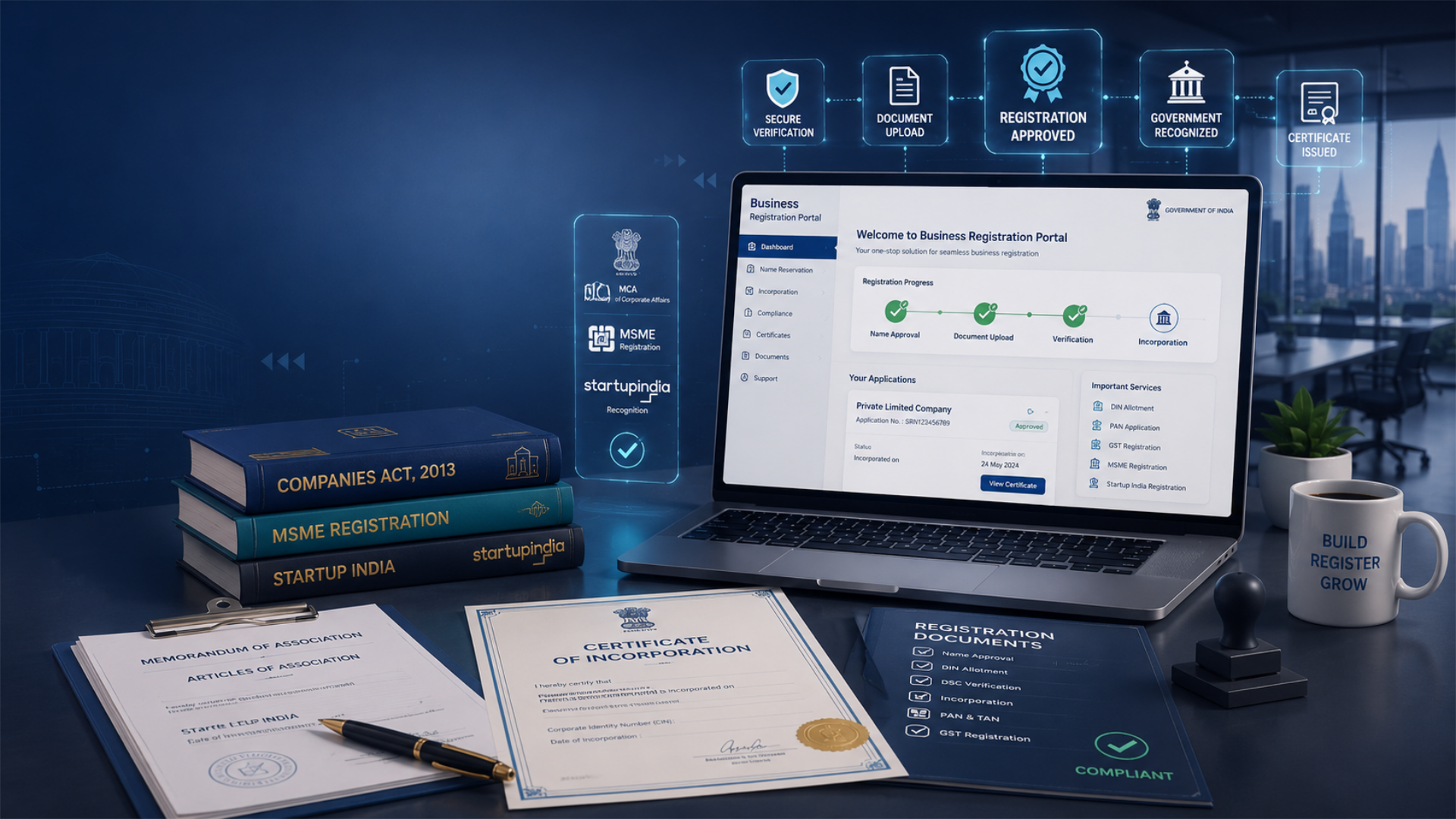
Step-by-Step Registration Process
Registration Workflow
- Name Reservation
- Submit proposed company name
- Await approval from regulatory authorities
- Receive name reservation certificate
- Document Preparation
- Draft MOA and AOA
- Prepare shareholder agreements
- Verify document accuracy
- Online Registration
- Access official government registration portal
- Complete online application forms
- Upload required documentation
- Pay registration fees
- Statutory Approvals
- Obtain Digital Signature Certificate (DSC)
- Apply for Director Identification Number (DIN)
- Complete mandatory compliance checks
- Certificate of Incorporation
- Receive provisional registration
- Verify all details
- Obtain final incorporation certificate
Ready to launch your private limited company?
Get incorporation, ROC filing, and compliance support handled end-to-end by experts.
Start RegistrationPost-Registration Compliance
Mandatory Requirements
- Tax Registration
- Obtain Tax Identification Number
- Register for Goods and Services Tax (GST)
- Setup corporate tax accounts
- Statutory Registrations
- Employees' Provident Fund registration
- Professional tax registration
- Employees' State Insurance registration
- Ongoing Compliance
- Annual financial statements
- Statutory audits
- Annual general meetings
- Maintaining proper accounting records
Advantages of Private Limited Company
Strategic Benefits
- Legal Protection
- Shareholders' liability limited to investment
- Personal assets remain protected
- Separate legal entity status
- Financial Advantages
- Easier access to venture capital
- Potential tax benefits
- Enhanced credibility with financial institutions
- Operational Flexibility
- Simplified ownership transfer
- Perpetual succession
- Professional management structure
Common Challenges and Solutions
Potential Hurdles
- Regulatory Complexity
- Challenge: Multiple compliance requirements
- Solution: Professional legal and accounting support
- Initial Capital Requirements
- Challenge: Minimum capital investment
- Solution: Strategic financial planning
- Alternative: Phased investment approach
- Documentation Intricacies
- Challenge: Comprehensive documentation
- Solution: Professional consultation
- Recommendation: Utilize digital tools and templates
Conclusion
Registering a private limited company represents a strategic step in your entrepreneurial journey. By understanding the process, preparing comprehensive documentation, and maintaining ongoing compliance, you can establish a robust business framework.
Targolegal remains committed to providing expert guidance throughout your business registration process. Our team of professionals stands ready to support your entrepreneurial aspirations.
